Case study — IronVault
IronVault had a strong technical offer, but the proposition was difficult to explain.
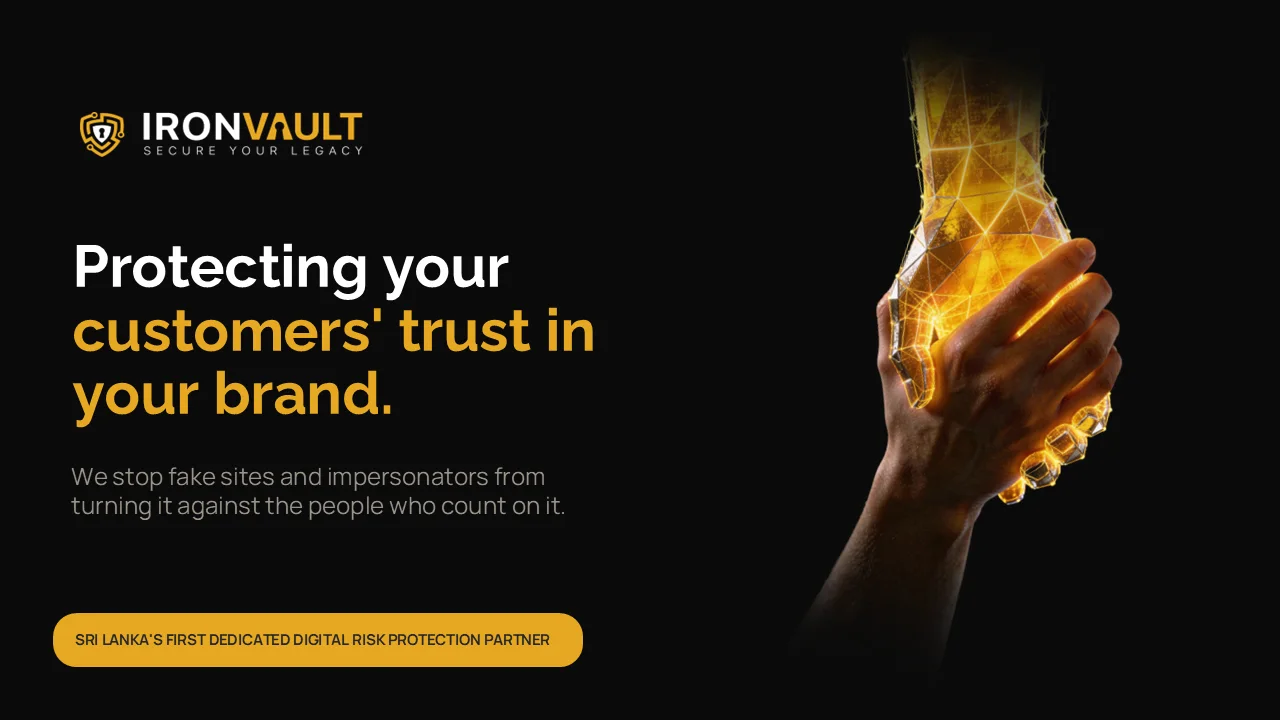
We rebuilt the story around what all three technologies protect: the trust customers place in the brand.
Narrative Strategy · Content Development · Corporate Profile · Presentation Design
The challenge
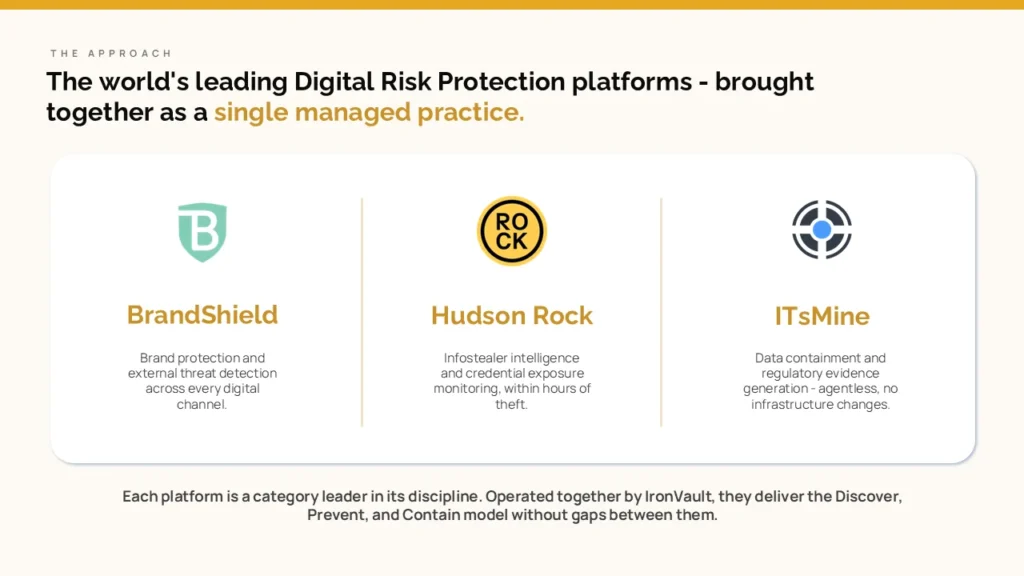
IronVault brought together three specialist security platforms. Each was credible on its own.
But presented separately, they read like three different stories. A buyer found it hard to follow.
The communication needed to:
How we approached it
We studied the existing material, the platform capabilities, the claims being made and the evidence behind them.
AI helped us organise and compare information, explore different ways to group the offer and test possible story structures.
But the core strategic question was human:
“What problem do all three technologies solve that a business leader already cares about?”
The answer was trust.
3 specialist technologies
One buyer problem
Customer trust
The technology was not the story.
Trust was.
From technology to trust
“What technologies does IronVault provide?”
“How does IronVault protect the trust customers place in your brand?”
The early material naturally explained the offer through the technologies themselves. That made sense internally. But it made the buyer do too much work.
We changed the order of the story. The buyer could now understand the risk first. The technology then became the evidence behind the response.
The final story was organised around customer trust rather than the technologies themselves.
Trust became the story.
Technology became the evidence.
The architecture
Once the central idea was clear, we needed a simpler way to organise the technologies underneath it.
Instead of presenting the offer platform by platform, the offer was structured around Discover, Prevent and Contain: three actions a buyer can follow.
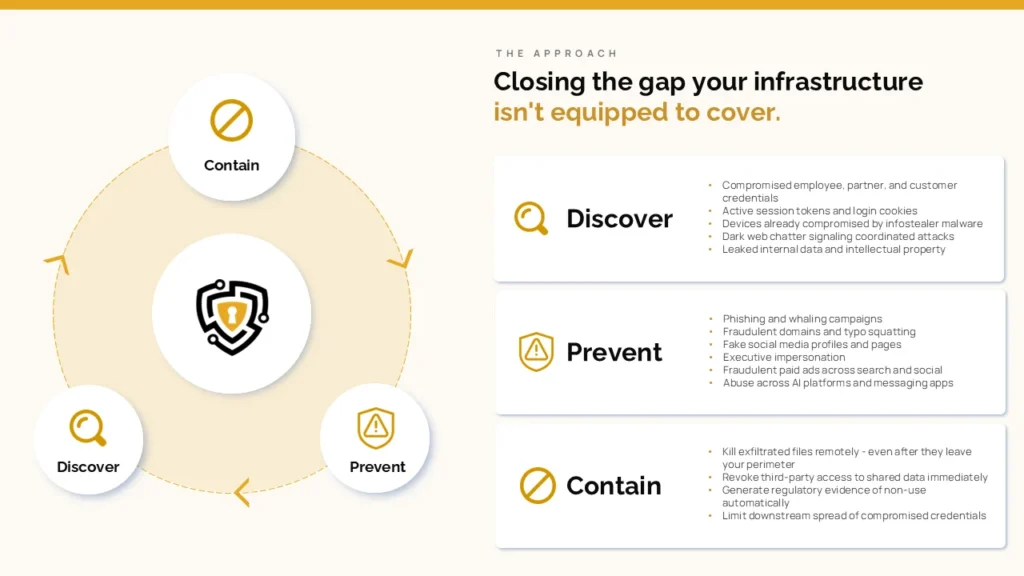
Find exposure and threats before they become larger problems.
Act against threats targeting the brand and its customers.
Reduce the impact when information or credentials have already been exposed.
Three specialist technologies now read as one managed security service.
The strategy that mattered
AI supported research, synthesis and iteration, while strategic direction and final judgement remained human-led.
— research
— consolidate information
— compare claims
— explore structures
— draft alternatives
— iterate quickly
✓ that trust should be the organising idea
✓ that the story should lead with risk, not technology
✓ how the three capabilities should be grouped
✓ which claims were strong enough to use
✓ what should be rewritten or removed
✓ what language sounded like vendor marketing rather than IronVault
✓ what the buyer needed to understand first
If a claim could not meet the credibility bar, it did not belong simply because it sounded impressive.
The result
Show & Tell helped IronVault turn three specialist cybersecurity technologies into one clear proposition. The final profile gave IronVault a simpler, more believable way to explain the business.
Customer trust tied the whole offer together.
Discover, Prevent and Contain replaced a fragmented platform-by-platform explanation.
The buyer could understand the business problem before the technology.
Weak or unsupported claims were challenged rather than polished.
The final story moved from risk → relevance → response → proof → action.
The strategy, made visible
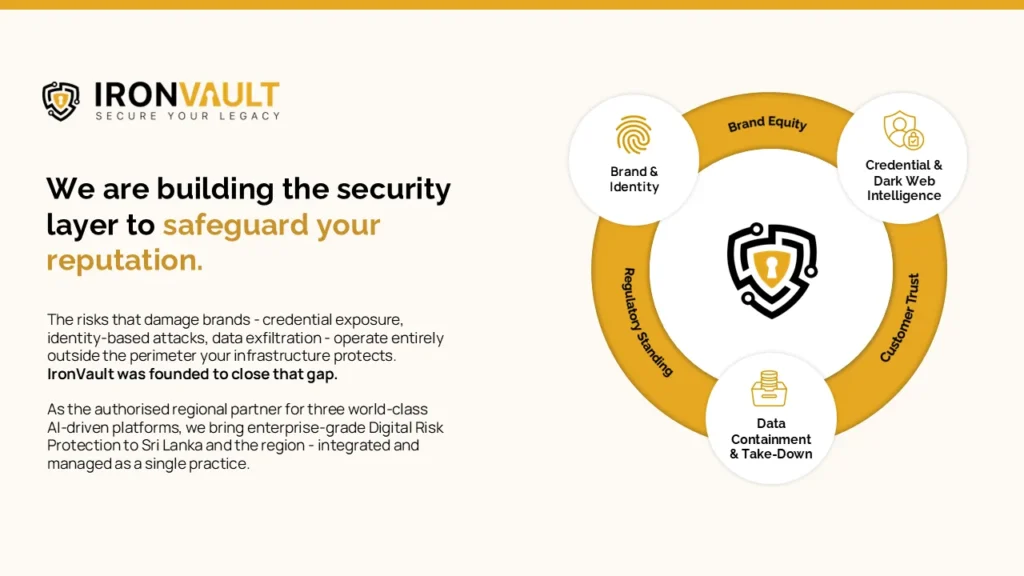
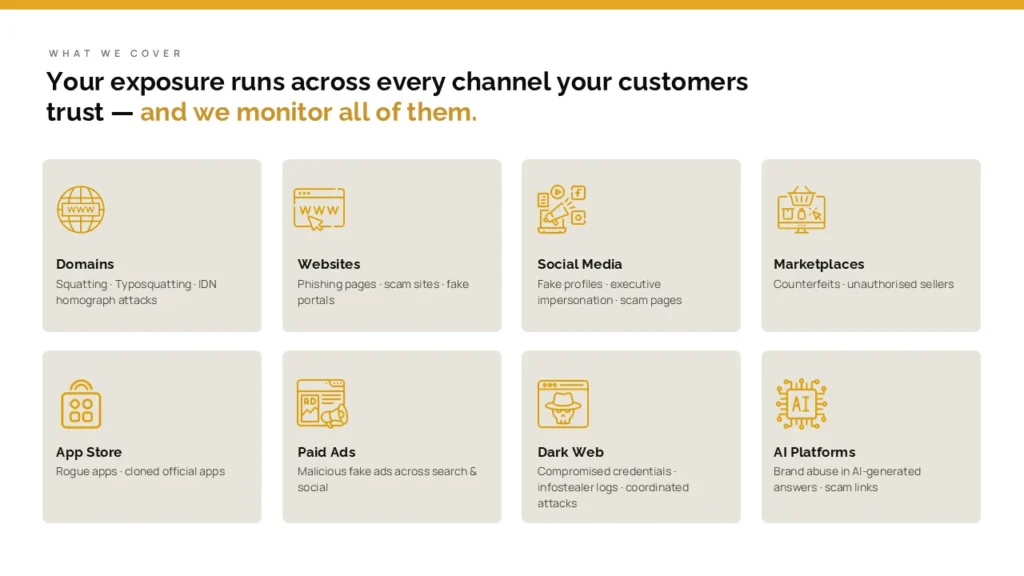
The business problem moved ahead of the technology.
Three technologies became one understandable architecture.
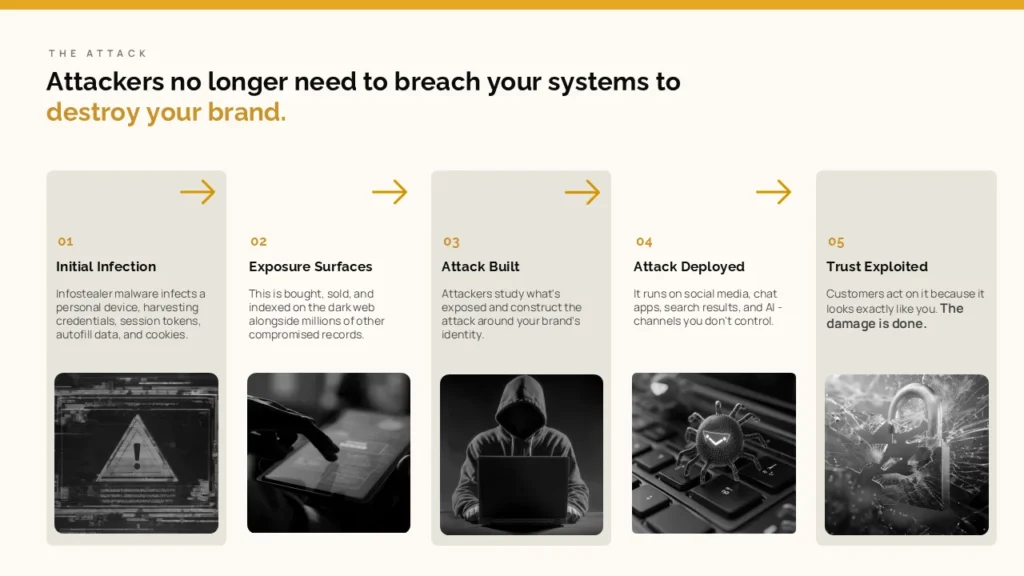
The risk became easier for a non-technical buyer to see.
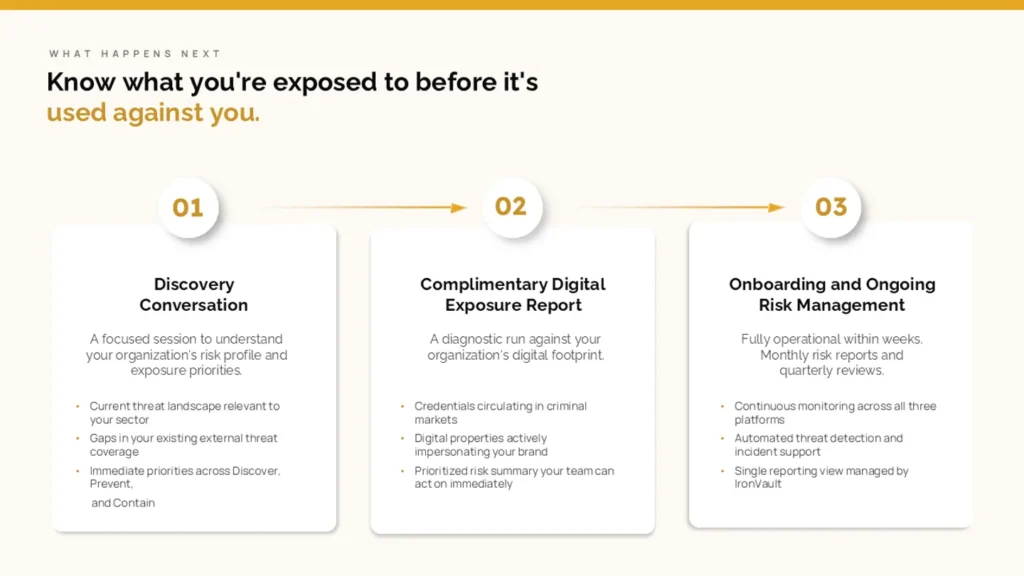
The profile moved from explanation toward action.
The repeatable part
AI helps us explore more possibilities and move faster. Human judgement determines which story is clear, credible and worth presenting.
See how we work →Let's talk
We help businesses turn complex ideas into clear, credible communication people can understand and act on.
Talk to Us →